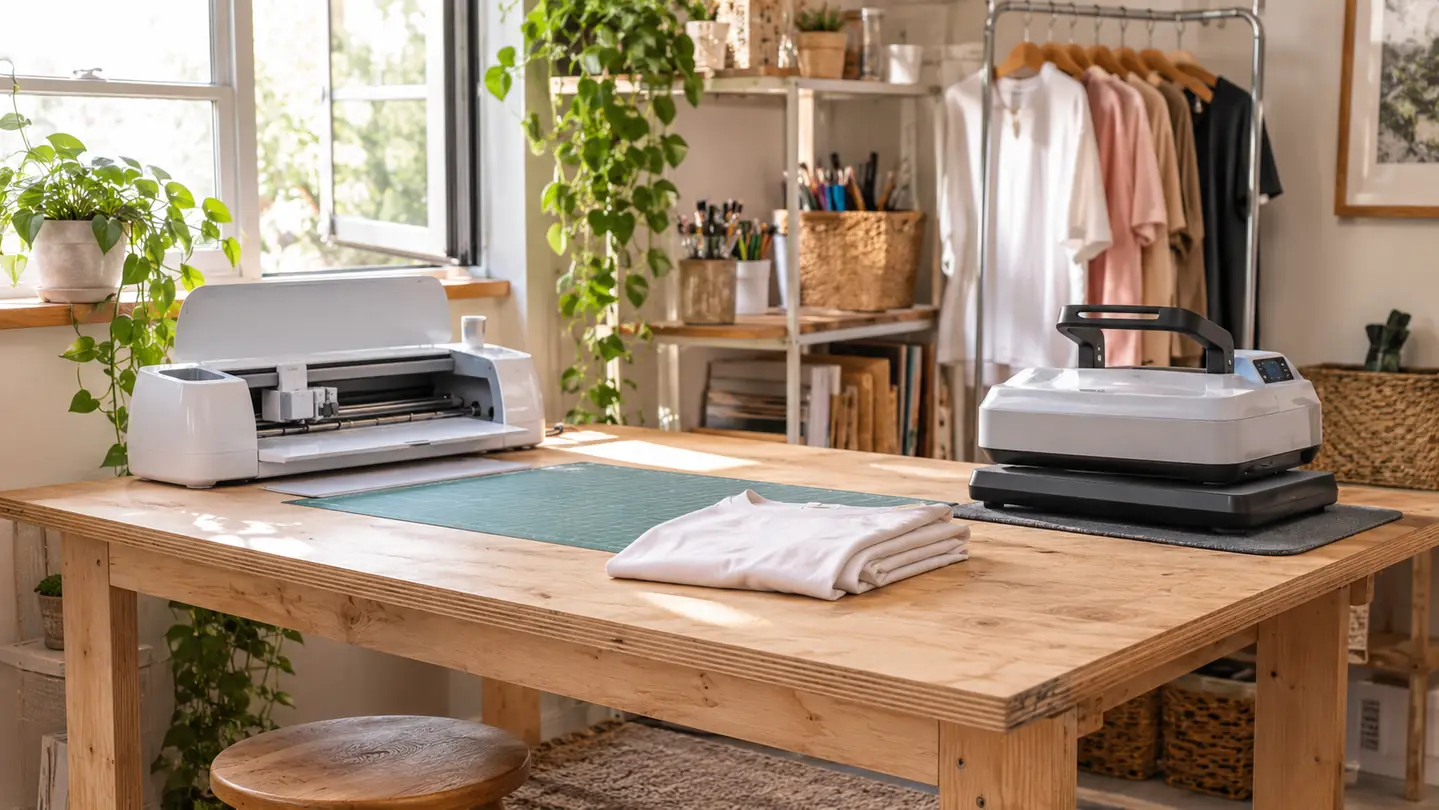
Back in January 2025 I was cutting iron-on vinyl with the same kitchen scissors I used to open boxes in the cafeteria. Mason's team shirts were the first thing I tried, and the letters peeled off after a few washes, which is a polite way of saying I wasted a Saturday afternoon. The scissors made my hands ache. That is how a Cricut Explore Air 2 ended up on the spare bed in February, with me wondering what I had gotten myself into.
Two months later a clamshell press took over the iron's job for good. Nineteen months on, those two machines are still the center of everything I make: shirts, totes, a pillow cover when the mood hits. Here is why a cutting machine and a heat press belong in the same room, in roughly the order I figured it out. One safety note first, because I never want to leave it out: the window stays open, the box fan runs, Pepper the cat is shut out of the craft room the whole time the press is hot, and the grandkids do not touch it.
The machine that made my second shirt look like it came from a store
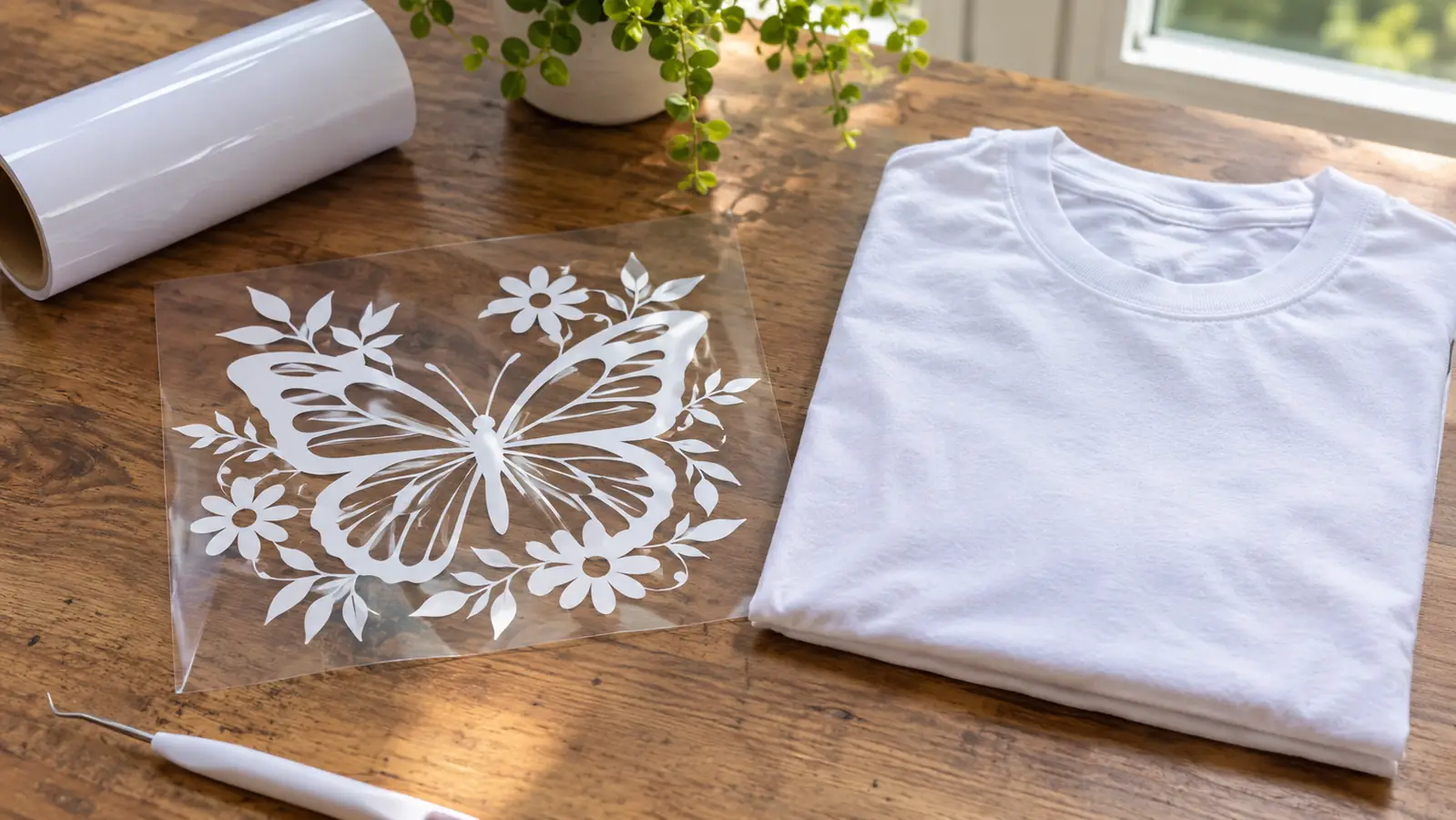
Same design as my hand-cut attempt. Same shirt. The only thing that changed was handing the cutting to the Explore Air 2 instead of a pair of scissors.
Amazon Check Today's Price on Amazon →It cuts the exact iron-on vinyl your press is waiting for
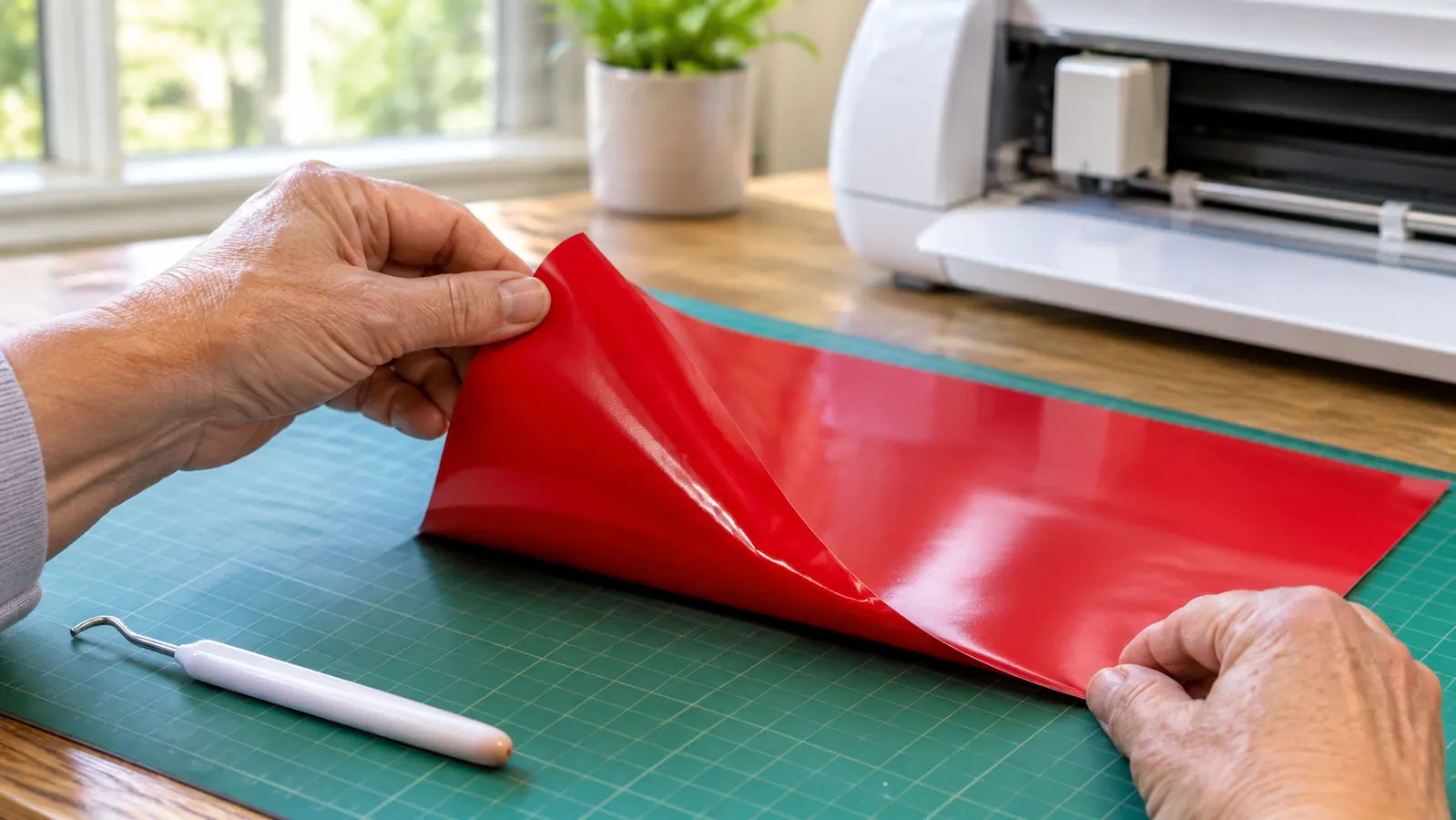
Every shirt I press starts as a flat sheet of heat transfer vinyl, and the cutter is what turns that sheet into letters. I load the vinyl, send the design from my laptop, and the Premium Fine-Point Blade does the work. What comes off the mat is a mirror-image shape ready to be weeded and pressed. If you are still tracing letters with a pencil and cutting them out by hand, this is the step that changes the whole hobby. My first Mason shirt had wobbly letters. The second one, cut on the machine, looked like something off a rack.
The blade gets detail my scissors never could
Scissors cannot follow a tight curve. The blade can. Small lettering, thin outlines, the little gap inside an A, all of it comes out clean because the machine is doing the steering and not my tired hands. At 61 my grip is not what it was after 28 years of lifting trays, so handing the fine work to a machine was a genuine relief. On any design with real detail, this is the difference between something that looks homemade and something that looks made.
Designs come from the app, not from my handwriting
I am not a designer. The app that comes with the Cricut is where the designs live, and I connect from my laptop or my phone over Bluetooth. I pick a shape, size it, tell it to cut. That is the whole workflow. I have never once had to draw a letter freehand, which is good, because my handwriting on a good day looks like a doctor's note.
Bluetooth keeps the cutter off the pressing surface
Here is the practical part nobody mentions. The machine is wireless, so it sits at the far end of the table from the press and I never have to unplug anything to make room. The press stays on its heat-resistant mat, the cutter stays where it is, and I carry the vinyl between them. When you are pressing a dozen team shirts in one afternoon, not rearranging the room every twenty minutes matters more than it sounds.
It cuts more than 100 materials, so the press earns its space
The listing says this machine cuts more than 100 materials, and I have barely scratched the surface. Card stock for gift tags. Fabric. Vinyl for decals on Lily's school folders. The press handles the shirts and totes, the cutter handles everything flat, and between the two of them I stopped running to the craft store every other week for one more thing. That is the real reason they pair well. One feeds the other.
Every ruined blank I have had came from a bad weed, not from the press.
The footprint fits a spare-bedroom table
Ray built me a six-foot table out of plywood and four-by-fours, and the cutter takes up almost none of it. It measures 12.5 inches wide, 10 inches high and 3 inches deep, and it weighs 16 pounds, so I can slide it over when I need the whole surface for pressing. It lives in the spare bedroom with the window and the fan. Nothing in that room is a dedicated shop. It is a bedroom with a mat on the floor and a hook on the wall.
The included blade, pen and mat cover a whole first project
The box came with the Premium Fine-Point Blade and its housing, a fine-point pen, and a LightGrip mat. That is enough to cut, enough to draw, and enough to hold the material still while it happens. I have added mats since, because I am rough on them, but I did not have to buy anything extra to get my first project to the press. For someone starting from nothing, that matters more than the speed of the thing.
Clean cuts make weeding fast and save your blanks
Weeding is the part nobody warns you about. You sit with a hook, peeling the extra vinyl away so only the design is left on the carrier sheet. Clean cuts make that a ten-minute job. Ragged cuts make it a fight, and a fight is how you tear a letter in half and start over. Every blank I have ruined came from a bad weed, not from a bad press.
Six tools mean it keeps finding work after the first season
The Cricut is compatible with six tools for cutting, writing, foiling and more, so it does not run out of uses once the ball season ends. I started with vinyl for shirts and I am still mostly doing vinyl for shirts, but the pen has drawn gift tags and the card stock cuts filled a table at the church fall festival. A hobby tool that only does one thing ends up at a yard sale. This one keeps turning up new jobs.
Doing both steps myself catches mistakes before they are permanent
When I do the cutting and the pressing myself, I catch problems while they are still fixable. A design sized wrong shows up on the screen. A cut that shifted shows up on the mat. Only after those two checks does the shirt go under the platen. In the iron days I found out at the wash. Now I find out at the table, which is the only place a mistake stays small. That is worth the counter space alone.
None of this makes the cutter the star of the show. The press is what puts the design on the shirt. But the press only ever does what the cutter hands it, and a sloppy cut turns a good press into a machine that ruins good blanks. That is the whole argument. They are one process with two machines in it.
What I'd Skip
If I were starting over, I would skip a few things. First, I would skip buying the press on day one. Learn the cutter, learn what a clean weed feels like, and buy the press once you have a stack of cut designs waiting on it. Second, I would skip the no-name vinyl that comes bundled with a hundred sheets and no instructions. I have thrown away more of that than I care to admit. And I would skip doing any of this on the kitchen table with the family moving around me. The press gets hot, the room needs a window open and a fan running, and Pepper needs to be on the other side of a closed door.
Start with the cutter. The press can wait a month.
It is the order I did it in, and the order I would do it again. The Explore Air 2 is the piece that made everything after it go right.
Amazon Check Today's Price on Amazon →