
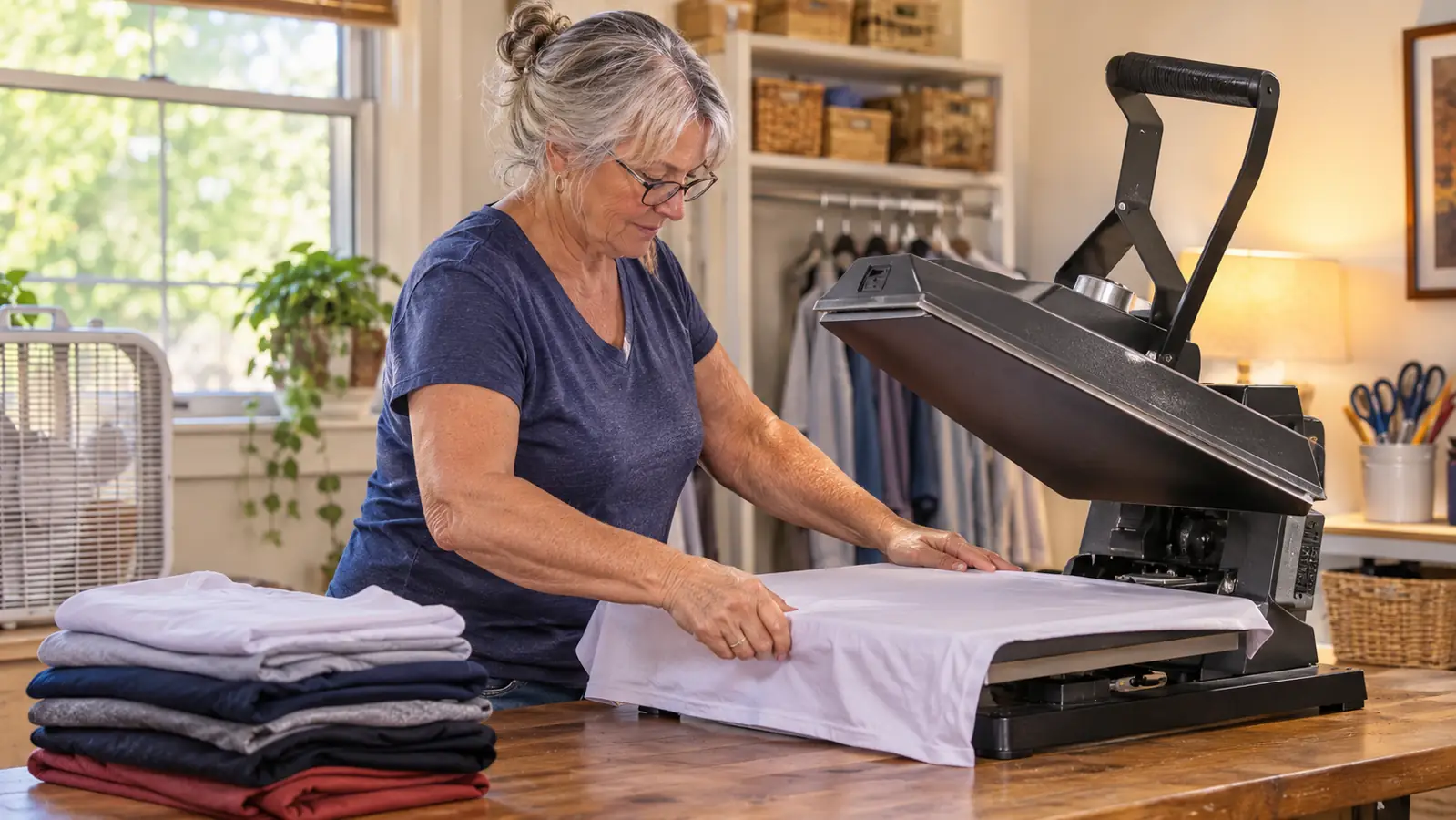
The first thing I pressed on the Fancierstudio 15x15 was a plain white cotton T-shirt for my grandson Mason, and I scorched a tan rectangle into the left shoulder of it. The temperature was too high, the shirt was bunched under the top plate, and I was rushing because Lily wanted to help and I had not yet learned that a seven year old anywhere near a hot press is a bad idea. That shirt went into the rag bag. Nineteen months later I can press a whole stack of team shirts on a Saturday afternoon without sweating over it, and almost none of that improvement came from the machine itself.
I am not a print shop and I do not play one on the internet. I am 61, I retired after 28 years managing a school cafeteria in Visalia, and I make shirts, tote bags, 20 oz skinny tumblers, coffee mugs and the occasional pillow cover for my grandkids, my church's fall festival and two or three local craft fairs a year. I bought the Fancierstudio in April 2025 because a household iron and hand cut vinyl had already cost me more shirts than I care to count. What follows is what nineteen months at the craft table actually taught me, including the parts I got wrong.
The Quick Verdict
A wide flat platen that does shirts, totes and pillow covers well and will not touch a hat or a curve. Mine has run nineteen months without a repair. I would buy it again knowing every complaint below.
Amazon Check Today's Price →The press I still use every week, nineteen months in
If flat work is what you need, this is the machine on my table. Check the current listing details and today's price before you commit.
Amazon Check Today's Price on Amazon →How I've Used It, Month by Month
Ray built me a six foot table in the spare bedroom, and the press sits at one end of it on a heat resistant mat. It is not a small thing. The footprint runs about 33 inches long by 23 wide and it stands 20 inches tall, so it claimed a third of my table the day it arrived and has not given any of it back since. Ray carried it in and Ray would carry it out if I ever asked, which I will not, because a machine that lives in one place is a machine you actually use.
For the first three months I used it only for heat transfer vinyl cut on the Cricut Explore Air 2 I had bought that February. Team shirts for Mason, shirts for the church festival, a tote bag for my sister that she still carries. In September 2025 I added the Epson SureColor F170 and started pressing sublimation on polyester and on the coated panels of totes, which is a different animal entirely and taught me a second round of lessons I could have done without.
The run I remember best is a Saturday in October 2025, the week before the church fall festival. I had nineteen shirts to press, all the same design, and I started at nine in the morning with the window open and the fan going. I laid the blanks out on Ray's table in two rows, pressed them one after another, and finished before lunch with a cup of coffee I never got around to drinking. That is still the job this machine is best at: the same thing, over and over, on a flat cotton shirt.
A normal week is six to twelve shirts. Before the fall festival it is more like thirty, spread across four or five evenings, and that is the run that tells you what a press is made of. Mine has never needed a repair, never thrown an error, and never done the thing my kitchen oven did where the heat wanders and you find out three blanks later. I open the window, run a small box fan, and Pepper gets shut out of the craft room for the whole session. She has opinions about this. I have safety.
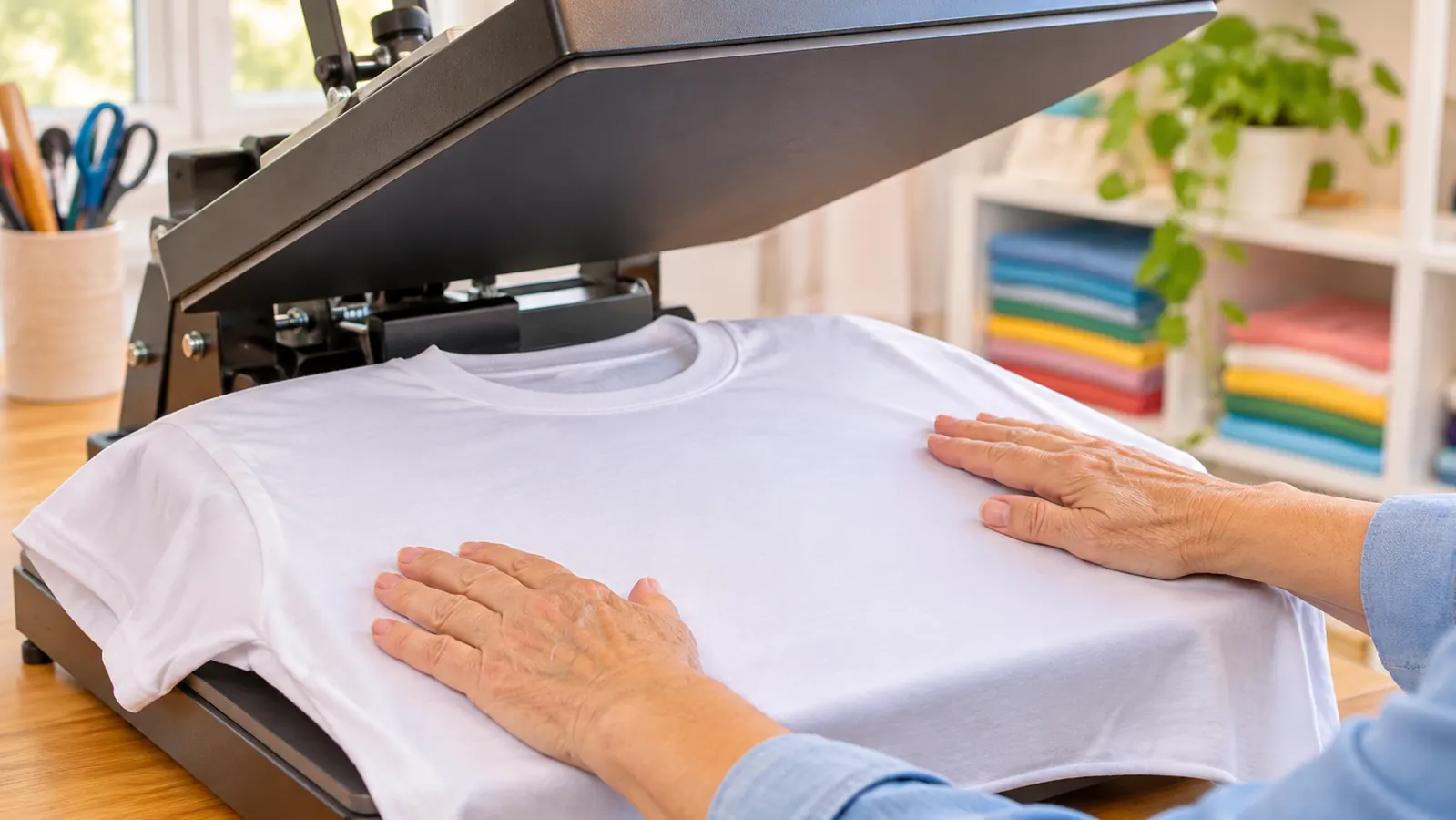
Setting It Up in the Spare Bedroom
The machine runs on 110 volts at 1800 watts. That is a real draw for a bedroom circuit, and my first week I tripped the breaker by running it on the same line as a space heater. Now it is the only thing drawing power on that circuit while I work. If your craft room shares an outlet with a window air conditioner, plan around that before you plan your first shirt.
Ventilation is not optional and I will say so in every review I write. Vinyl and sublimation both off gas when they are hot. By the end of a long run the room smells like a warm plastic swimming pool, and the fix is a window open at both ends of the room and a fan moving air out, not a candle. I also unplug the press when I am finished. Not switch off. Unplug. I have a bad memory and a good imagination, and those two things together are how a house burns down.
The worst night was a cold one in December 2025 when I decided I could keep the window shut because it was forty degrees outside. By the twentieth shirt the spare bedroom smelled like a hot hair dryer and I had a headache behind my eyes. I opened the window, set the fan in it blowing out, and finished the last eight with a sweatshirt on. Now the window is open whether it is January or July, and the fan runs the whole time the press is on.
The platen has a Teflon coating, which means the top surface wipes clean with a damp cloth when I get adhesive on it, and I have not needed to hunt for a cover sheet the way the women in my church craft group do with older machines. That coating is also the first thing I would look at on a used press.
The Controls and What the Numbers Actually Mean
The controls are electronic. There is a temperature setting and a time setting and both read out on a display, so you are not eyeballing a needle and hoping. The listing gives a range from 0 to 699 degrees Fahrenheit and a time range from 0 to 999 seconds, and it separately lists an upper temperature rating of 500 degrees. I have never come near the top of either range. Nothing I press wants to be that hot.
What matters more than the numbers is that the numbers stay where I put them. My old method was a household iron, and that heat was wherever the iron felt like being that day. Here I set the temperature, set the seconds, and the machine holds it through a run. For vinyl I use whatever the vinyl maker prints on the package, usually somewhere in the low 300s for something in the ten to twenty second neighborhood, and then I press a scrap of the same fabric before I go near a real blank. For sublimation I use the blank maker's recommended time and temperature and change nothing about it. When a package says fifteen seconds, I do fifteen seconds and I test first.
Here is the routine itself. I cut a one inch square of the same fabric and press a scrap of the same vinyl onto it. If a corner lifts once it is cool, the temperature goes up ten degrees or the time goes up two seconds and I try again on a fresh scrap. Those scraps live in a sandwich bag at the end of the table with the settings written on them in marker. It looks like hoarding. It has saved me a dozen good blanks.
The timer counts down to zero and I lift the handle. That sounds trivial and it is the single biggest reason my results got consistent. I used to count in my head while leaning on an iron, and I was wrong about the count roughly every time.
What Held Up and What I Ruined
Heat transfer vinyl on cotton is the easiest thing this press does and it is where I would tell anyone to start. The shirts I pressed in the summer of 2025 for Mason's team have been through a full season of practices, a washing machine and a dryer set hotter than it should be, and the letters are still on. The one design that peeled was a shirt where I got impatient and pulled the carrier sheet warm instead of letting it cool. That was me. The press did its job.
One thing I did not expect: the same vinyl setting behaves differently on a 50/50 blend than on pure cotton. The blend wanted a little more time and a little less heat on my press, and I learned that on a shirt that now lives in the rag bag. So I keep a scrap of every fabric I buy taped inside the cabinet door with the setting written on it. It takes ten minutes the first time and it has kept me from repeating that mistake all year.
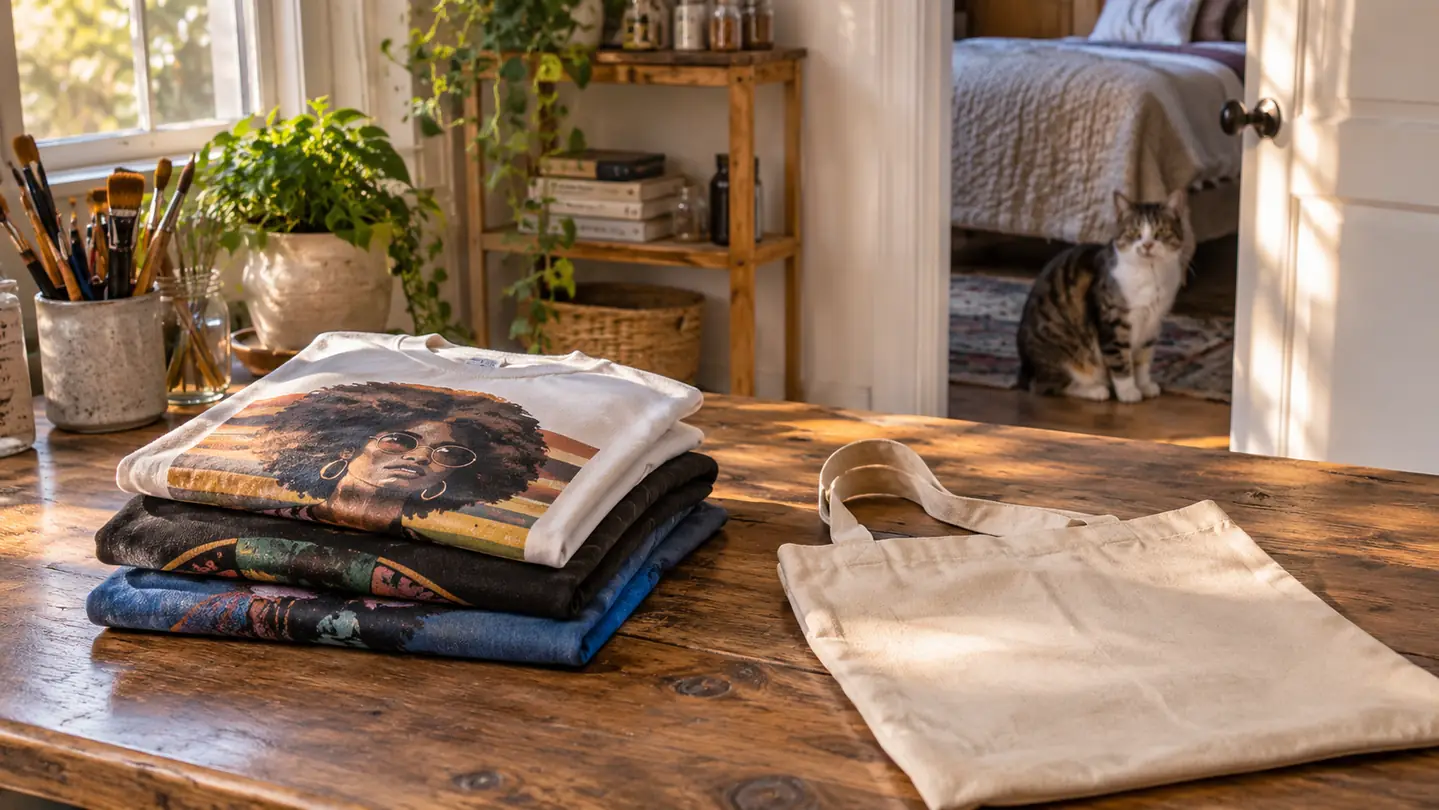
Canvas totes are where a 15 by 15 platen earns its keep and also where it stops short. A standard tote panel fits in one pass. A big market tote does not, so you press it in two and line the second pass up by eye. I have a tote in my own kitchen with a visible seam line across the middle of the design because my eye is not a laser. If large totes are the plan, that overlap is worth thinking about before you buy anything.
Sublimation on polyester shirts and on coated tote panels has been steady since the fall of 2025. The press holds temperature through a run of six or eight, which is what you actually need, because a machine that sags between blanks gives you one washed out transfer in the middle of a stack and you will not know which one until it has been through the wash. Pillow covers behave the same way with one warning. A cover with thick zipper tape will hold the platen up off the fabric and leave you a pale stripe. I fold a scrap of cotton beside the zipper to make up the difference.
Where It Falls Short
This is a flat press. It is not a hat press and it is not a tumbler press. Anything curved, anything with a brim, anything that needs pressure wrapped around it, this machine cannot do. In November and December of 2025 I did 20 oz skinny tumblers in my kitchen oven with shrink wrap, and several came out ghosted or with a seam line down one side. That was not the Fancierstudio failing. It is the reason a flat press on its own will not cover everything a hobby turns into.
Thick seams and heavy canvas fight a clamshell. The top plate has to come down flat and even, and a doubled tote seam under one edge means the other edge gets less of everything. I notice it most on pillow corners and on the thick hem of a sweatshirt. You learn to shift the blank and press twice, which is fine for a gift and tiresome for thirty.
After an hour the whole machine radiates heat like a small oven, and the spare bedroom gets warm even with the window open. I keep Pepper out, I keep the grandkids out, and I do not walk away from it, not to check the mail and not to answer the phone. The warranty is three months, which tells you what the maker thinks of the odds. Mine is at nineteen months with no trouble and I still would not leave it running unattended.
What I Liked
- A 15 by 15 inch platen covers a full adult shirt front, a standard tote panel and a pillow cover in one pass
- Electronic temperature and time controls hold steady through a run of eight or ten blanks
- 1800 watts recovers heat quickly between presses instead of creeping back up
- Teflon coated platen wipes clean and saves me a cover sheet on most jobs
- Few moving parts. Nineteen months of weekly use with no repairs and no errors
- Rated 4.6 across more than 9,500 Amazon reviews, which matches what I have seen on my own table
Where It Falls Short
- Heavy and it does not move, so decide where it lives before the box arrives
- Flat work only. No hats, no curved blanks, no tumblers
- Large totes and thick seams need a second press and a steady eye
- 1800 watts wants its own circuit in an older house
- Three month warranty
- The frame gets hot during long runs and there is no way around that except attention
Nineteen months, every team shirt Mason has worn since the spring of 2025, one church fall festival and two craft fairs. The only blanks I have ruined since month three were ruined by me being in a hurry.
Who This Is For
This is for the person who wants one machine on a table that presses a shirt flat, and who is not trying to run a print shop out of a garage. Grandparents making team shirts. Church and school volunteers. Anyone who has been fighting a household iron and losing. It is also a sensible first press for someone who already owns a cutter and expects to add sublimation later, because the same flat platen does both jobs. The listing even names mouse pads among the recommended uses, and I have pressed a few for the church youth room.
If you have a sturdy table, a window that opens, an outlet with room on it and someone willing to carry the box in, you have everything else you need. The Fancierstudio supplies the rest of it.
Who Should Skip It
Skip it if hats are your thing, if tumblers are your main product, or if you plan on oversized back prints across an adult shirt. Skip it if the craft room shares a circuit with a space heater or an air conditioner, because 1800 watts will find that out for you. Skip it if you want a long warranty, since this one runs three months, and skip it if you are not going to open a window and stay in the room while the press is on. And skip it if the machine has to come down off the table and go back in a closet every time, because that is how a heat press turns into an expensive shelf.
Nineteen months, no repairs, and it is still the machine on my table
If flat work is what you need, start here and spend your learning curve on scraps instead of good blanks. Check the current listing and today's price.
Amazon Check Today's Price on Amazon →