If you are standing in a spare bedroom trying to pick between the Fancierstudio 15x15 clamshell and the VEVOR 15x15, here is the short version. They press the same size shirt. The Fancierstudio is the one I bought in April 2025 and have run almost every week since. The VEVOR is the one two women in my church craft group own, and I have pressed shirts alongside them at the fall festival table. I have never run a VEVOR myself, and I am not going to pretend I have. What I can give you is 19 months of real use on the Fancierstudio, an honest read of both listings, and a straight answer about which one belongs on your table.
The short answer: the Fancierstudio is the safer first press if you want a machine with a long public ratings history behind it and you are willing to pay a little more for that. The VEVOR is the better call if cost is the deciding vote, or if you like the idea of buying your press, your mug setup and your accessories all from one brand. Neither machine will embarrass you in front of your grandkids. But I can only tell you what 19 months on the Fancierstudio has actually been like, so that is where most of this comparison lives.
| Fancierstudio 15x15 | VEVOR 15x15 | |
|---|---|---|
| Platen size | 15 x 15 inches | 15 x 15 inches |
| Cost | Costs more for the same platen size | Regularly the cheaper of the two |
| Platen surface | Teflon coating added to the heat platen, plus a 15-by-15-inch sheet included | Not called out on the listings I read |
| Ratings history | 4.6 stars from roughly 9,550 ratings on one listing | Spread across a large catalog, so no single listing carries that history |
| Controls | Electronic time and heat control, timer to 999 seconds | Digital controls, layout differs by model |
| Warranty | 3 months, stated plainly in the listing | Varies by model, so read the listing you are actually on |
| Best for | Pressing shirts and totes weekly in a home craft room | One-brand shopping for presses, mugs and blanks |
Where Fancierstudio Wins
The first thing I did before I spent a dime was read what other people had already ruined so I would not have to. The Fancierstudio listing shows 4.6 stars from roughly 9,550 ratings. That is a lot of people who bought a press, scorched a shirt, and came back to say so. Nineteen months in, I understand the number. Mine has run vinyl for Mason's Little League shirts, sublimation for Lily's tote bags, and heat transfer for the pillow covers I take to the church fall festival every October. Nothing has failed. The handle comes down with the same resistance it did the first week, the controller holds its temperature, and I have not had a single morning where I warmed it up and got nothing. A ratings history is not proof of anything, but it is the closest thing you get before you plug a machine in.
The second advantage is right on the surface of the platen. The listing says a Teflon coating has been added to the heat platen, and the press arrives with a 15-by-15-inch heat press sheet. I did not understand why that mattered until my third week, when I pressed a shirt with the vinyl face up and the platen straight down on it, and peeled a ghost of a logo off a shirt I had already promised to Mason. The sheet and the coated platen are the reason my later shirts came out clean. The controller matters too. It is electronic time and heat control, with a timer that runs from 0 to 999 seconds and a temperature readout that goes to 699 degrees Fahrenheit, even though the listing puts the upper temperature rating at 500. For the vinyl and sublimation work I do, that is more range than I need, and the precise timer means I can set eight seconds and get eight seconds instead of counting in my head while a shirt sits there cooking.
Where VEVOR Wins
I am not going to pretend the VEVOR loses every round, because it doesn't. For the same 15-by-15-inch platen, the VEVOR is regularly the cheaper of the two machines. That is real money for a hobby you might not stick with. Think about how many presses get bought, used for six shirts, and then sit under a bedsheet in the garage for two years. If there is a decent chance you are one of those people, spending less on the machine leaves more room for blanks, vinyl and a good pair of heat gloves. The two women in my craft group who own one have pressed plenty of shirts between them at our fall festival table, and neither has had to send it back or replace it. A cheaper machine that does the job is not a compromise. It is a cheaper machine that does the job.
The other place VEVOR genuinely wins is choice. They sell a wide catalog, with combo presses, mug attachments, different platen sizes and a long list of blanks and accessories. If you want one brand for everything from your shirt press to your tumbler setup, VEVOR has more shelves to shop from. I went the other way and built it piece by piece: a cutter in February 2025, this press in April 2025, a sublimation printer in September 2025, and a tumbler press in January 2026. That worked for me because I was learning one thing at a time and I could only be confused about one machine per season. But if you already know you want shirts, mugs and tumblers, the brand with the bigger catalog saves you a pile of comparing.
The press I have run every week for 19 months without a single failure
It sits on my table on a heat-resistant mat, it has pressed ball team shirts, tote bags and pillow covers, and it has never once failed to come up to temperature. Check the current listing and read the ratings for yourself before you decide.
Amazon Check Today's Price on Amazon →The Details That Actually Matter Once It's on Your Table
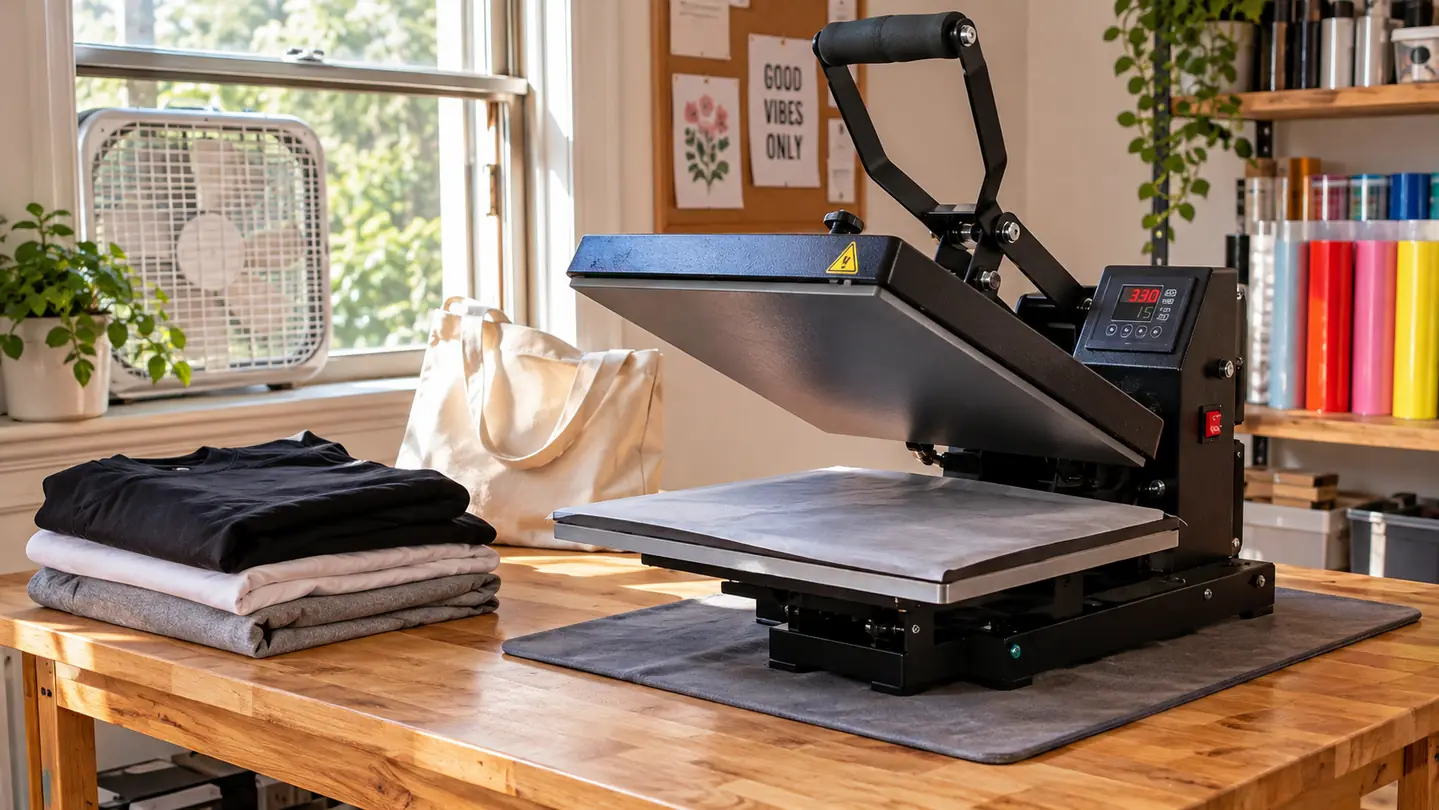
The machine is 33 inches long, 23 inches wide and 20 inches tall, and it is heavy enough that Ray and I carried it up the stairs together rather than me dragging it. It lives on the six-foot table he built, on a heat-resistant mat, under the window I open every single time the press is on. Ventilation is not optional. Vinyl and sublimation paper both put off fumes when they get hot, and a spare bedroom with the door shut will tell you about it by the third shirt. I run a small box fan in the window and I leave the door open. Pepper, our gray tabby, is shut out of that room whenever the press is hot. And the grandkids do not touch it. Mason is ten and plenty smart, and he still does not get to lift that handle. Nobody should ever walk away and leave a hot press unattended.
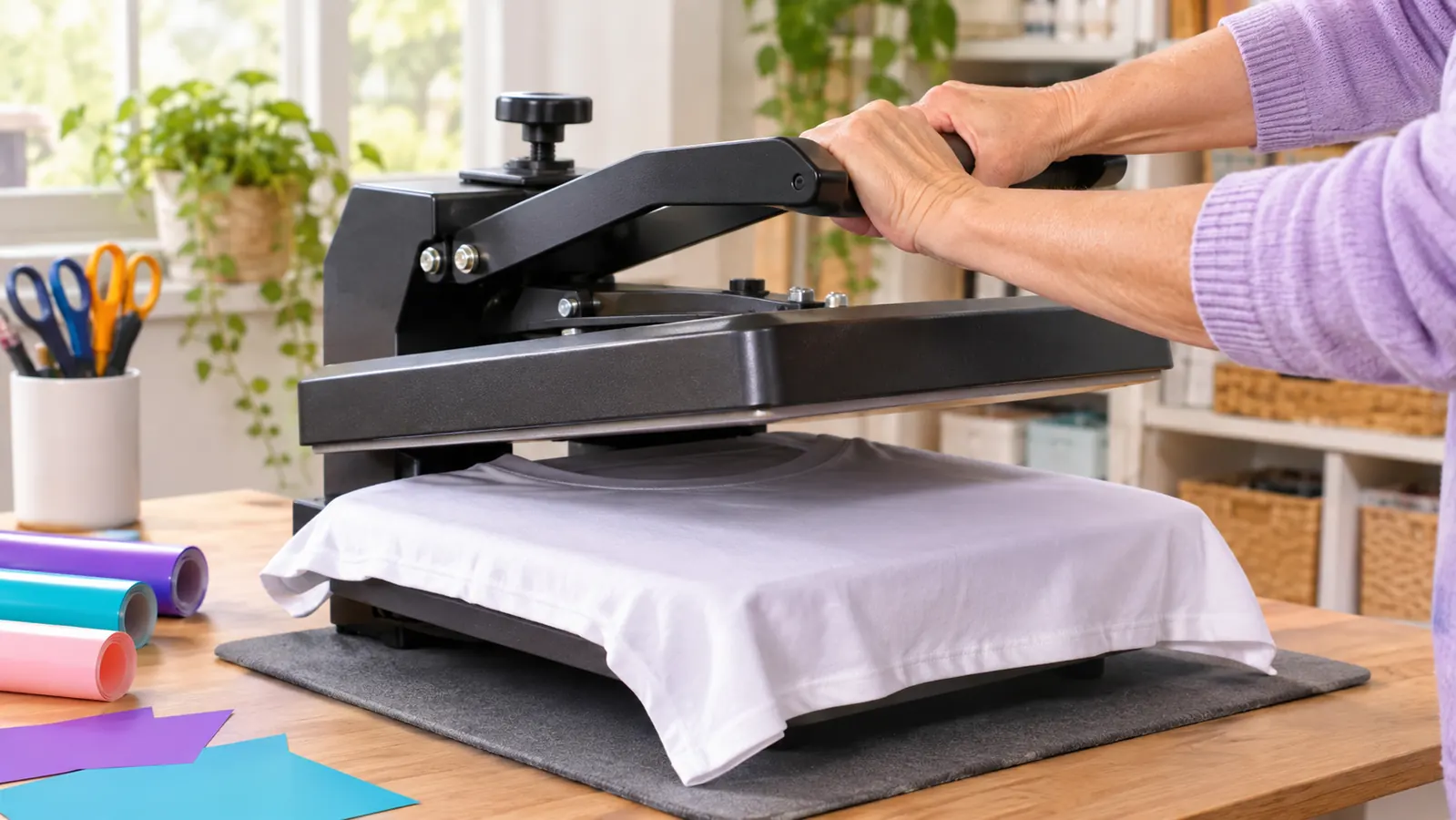
Pressure is the other thing that decides whether your first month is fun or miserable. You will find the pressure adjustment at the top of the arm, and you will be tempted to crank it down hard because more feels like better. It isn't. I set mine by pressing a scrap of the actual fabric I plan to use, then checking whether the vinyl or the sublimation paper came away with a clean edge. Too light and the design lifts at the corners after two washes, which is exactly what happened to Mason's first team shirts when I was still using an iron. Too heavy and you get a shiny pressed mark around the edge of the shirt that never comes out. That is not a brand problem in either machine. It is a setup problem, and it is why I press a scrap before every new blank now. Start with the blank maker's recommended time and temperature, do a test piece, then adjust.
One more thing, and it is the weakest part of the Fancierstudio: the listing states a three-month warranty. Three months is not long. Mine has been fine for 19, but if a heat press is going to fail, it usually fails in the first month or two while you are pressing everything in the house, so the coverage does line up with the risk. Read it before you buy and decide whether you are comfortable with it. The VEVOR warranty changes from listing to listing, so check the exact one you are on rather than trusting the brand name to cover you.
The sheet and the coated platen are the reason my later shirts came out clean. I learned that one on a shirt I had already promised to Mason.
Nineteen Months In, Here Is the Honest Report
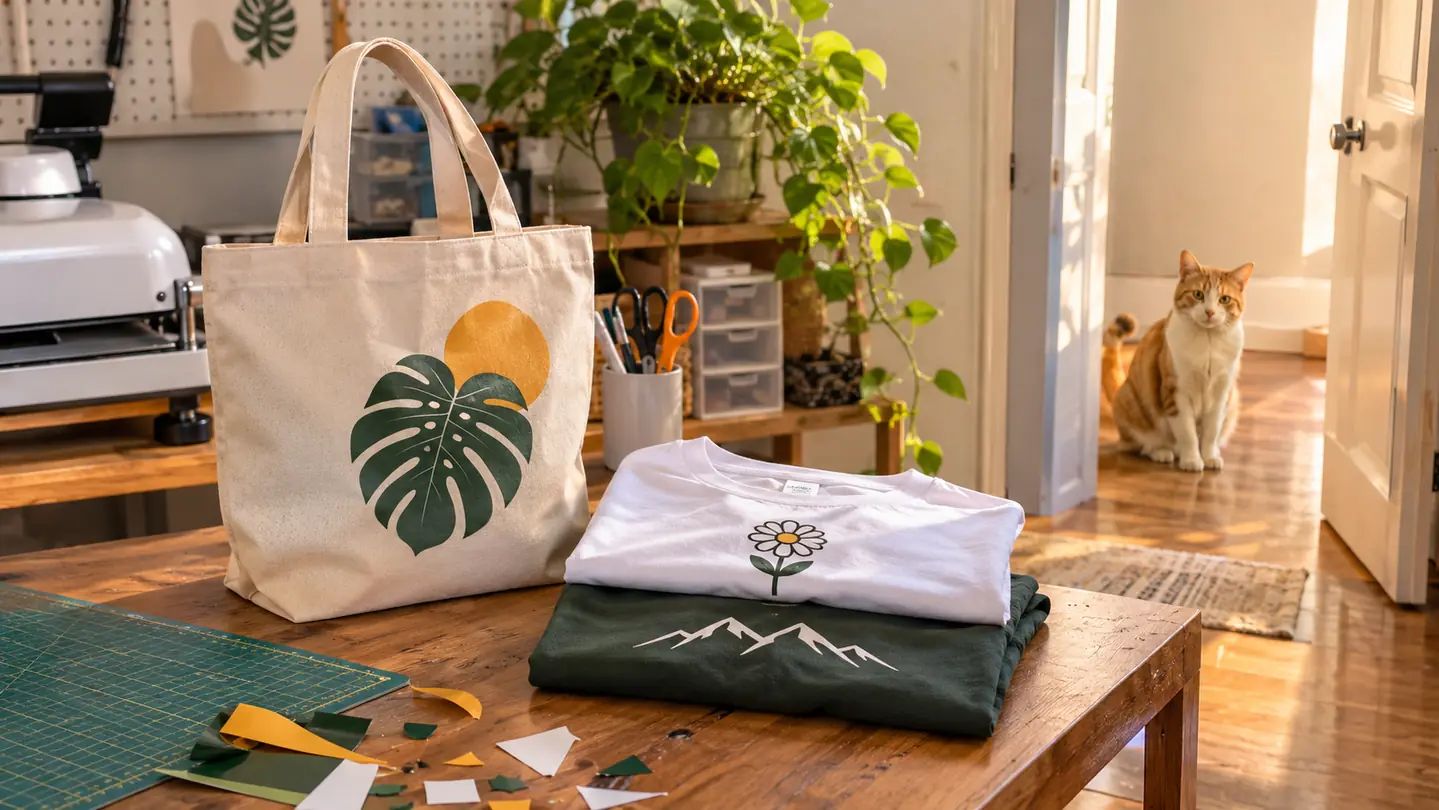
My Fancierstudio turned 19 months old this month, and the report is boring in the best way. The platen is scuffed from a few hundred shirts, the sheet that came with it has a crease in one corner, and the timer still clicks down the way it did on day one. I press shirts, tote bags and pillow covers on it. I have pressed a 20-ounce skinny tumbler on it only when I need a flat surface, since the tumbler press handles those better. I have replaced nothing. If you had told me in January 2025, back when I was cutting iron-on vinyl by hand with scissors and watching letters peel off Mason's team shirts after two washes, that a machine would still be earning its spot on my table 19 months later, I would have laughed at you.
What I would tell a friend at my craft table is this. Buy a press you can grow into, not one you will outgrow in a month, and buy from a listing with enough ratings that the failures show up in the reviews instead of in your living room. Then put your real energy into the boring parts: a test pressing before every new blank, a heat-resistant mat, an open window, and a house rule that the press is never left on when you walk out of the room. That rule matters more than the name on the box. I walked away from a hot press exactly once, to answer the door, and I came back to a smell that made my stomach drop. Nothing caught, and I got lucky, and I have not done it since.
Who Should Buy Which
If you want the short version to carry to the checkout page, here it is. Buy the Fancierstudio if this is your first press, you plan to press shirts and totes most weeks, and you want a long ratings history and a Teflon-coated platen behind your first year of mistakes. Buy the VEVOR if cost is the deciding factor, if you want your press, mug setup and blanks from one brand, or if you are honestly not sure this hobby will stick and you would rather spend less finding out. Both will press a 15-by-15-inch shirt. One is the machine I have run for 19 months. The other is the machine I have watched two friends run without a single complaint. Neither answer is wrong. Pick the one that matches your table, your budget and your patience for reading listings.
My pick for a first press in a spare bedroom
15 by 15 inches, electronic time and heat control, Teflon-coated platen, and 19 months of shirts, totes and pillow covers on my own table. Open the window, keep the cat and the grandkids out of the room, and never leave it hot and unattended.
Amazon See the Fancierstudio 15x15 on Amazon →