Short answer first, because when I am the one reading a comparison I want the bottom line before I want the story. For the shirts, totes, mugs and pillow covers that come out of my spare bedroom, A-SUB sublimation paper is what I buy, and it is what I have bought on every reorder since October of last year. It is a coated sheet, 8.5 by 11 inches, 110 sheets to the pack, listed at a paper weight of 120, and it takes sublimation ink only. HTVRONT is not a bad paper. Two women in my church craft group use it every week and what comes off their press looks lovely. It just handles a couple of things differently, and one of those differences might matter more to you than it does to me.
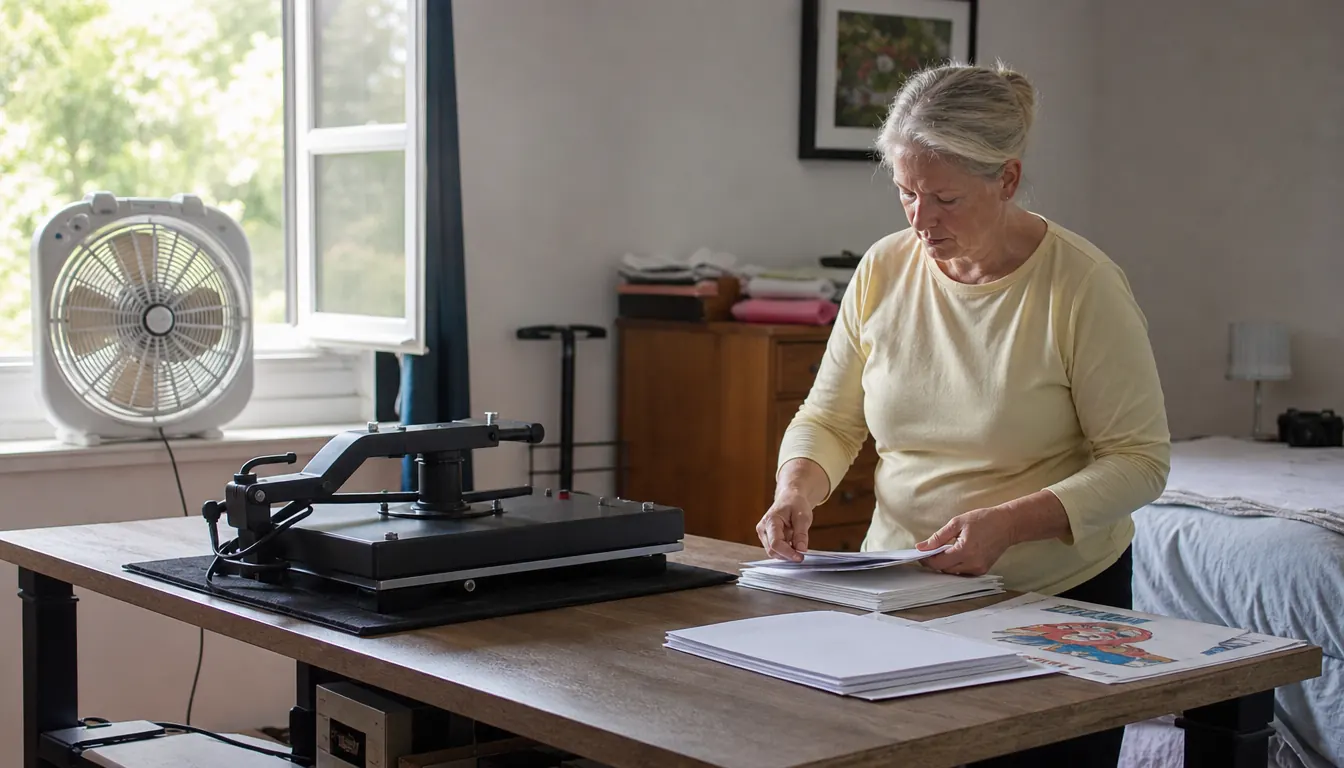
I should say up front who is doing the comparing. I am 61, I retired after 28 years managing a school cafeteria, and I press shirts for my grandkids Mason and Lily, for friends, for our church fall festival, and for two or three small craft fairs a year. That is the entire operation. One spare bedroom with a window I prop open and a box fan, one table my husband Ray built, and one press on a heat resistant mat. So this is not a lab test with instruments. It is 13 months with one paper, several reorders, and a notebook where I write down what worked and what I ruined.
| A-SUB | HTVRONT | |
|---|---|---|
| Sheet sizes in the listing | 8.5 x 11 inches only, 110 sheets to the pack | Several sheet sizes and pack counts, including 11 x 17 |
| Listed paper weight | Paper weight of 120, a sturdier sheet in the hand | A lighter sheet that some printers feed more easily |
| Ink it requires | Sublimation ink only, regular ink will not work | Sublimation ink only, same requirement |
| Hard blanks named on the listing | Ceramic, tile, phone cases and metal spelled out | Covers hard blanks generally, less specific in the copy I read |
| Fabric guidance | Polyester and light colored fabric with cotton content of 30% or less | Similar polyester guidance, same cotton ceiling |
| Consistency across packs | Same result across several reorders over 13 months | No complaints from the two people I know, but no reorder history I can judge |
| Where you can get it | Ordered online, my local craft store does not stock it | Carried in big box craft stores and many more listings |
| Best for | Batch pressing shirt fronts, totes, mugs and tiles on one sheet you stop worrying about | Large layouts, and anyone who wants paper in hand today |
How I Compared Them, and What I Did Not Do
I want to be straight about my method, because a comparison where the writer has only touched one of the two products needs to say so out loud. I have never owned HTVRONT sublimation paper. Everything I know about it comes from three places. First, the listing itself, read slowly, twice, with a highlighter. Second, two women in my church craft group who use it for shirts and tumblers and who let me handle their finished pieces. Third, a vendor at a craft fair in Tulare who had both brands stacked on her table and was happy to talk paper while business was slow. That is my whole research file, and I am not going to dress it up as more than that.
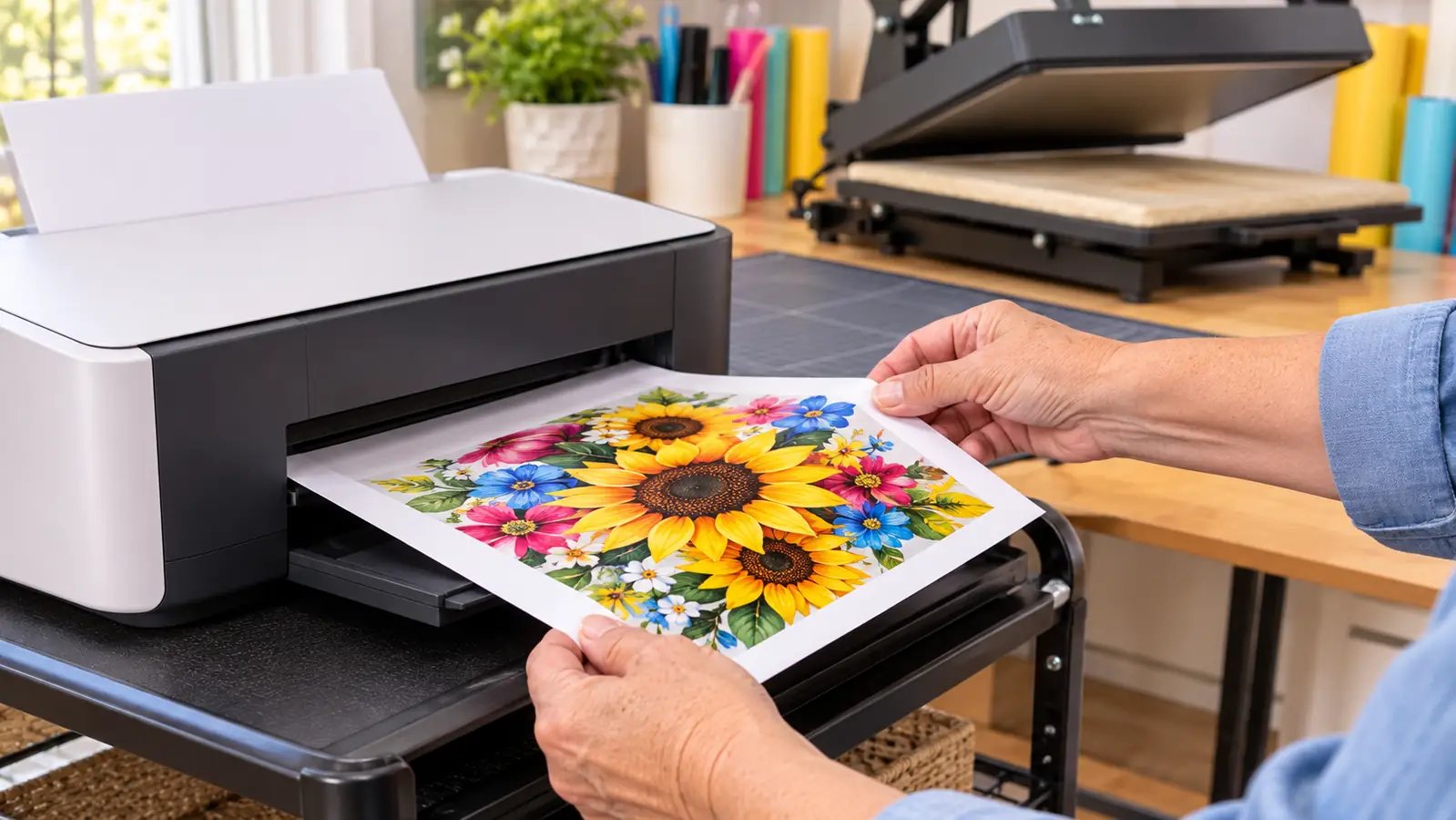
The A-SUB side I know the hard way. I bought the Epson SureColor F170 in September of last year, and my first paper was not this one. It was the sample sheets in the box plus one pack of no-name clearance paper I grabbed at a craft store because it was there. That paper bled. I lost a tote bag and two tiles before I understood the problem was the paper and not me. When I ordered A-SUB in October, the first pack behaved, the second pack behaved, and I stopped thinking about paper at all, which is the highest compliment I can pay a supply. I still have two of those ruined pieces in a box under the table. The tote came out with a soft halo about a sixteenth of an inch wide around every letter, and no amount of extra press time would sharpen it. The tile looked like the picture had been left out in the rain. I ran that tote a second time at a longer dwell before I would admit the paper was the problem, which is the kind of stubbornness that costs a beginner blanks.
There is one more thing about comparing paper that nobody warns you about. Paper is the cheapest piece of the whole setup and it is the one that ruins the most expensive blank. A shirt or a tumbler takes real time to prepare and press, and if the sheet under it releases unevenly you find out after the press opens, not before. So when I weigh two papers I am not really weighing paper. I am weighing how many blanks I can afford to lose while I figure out whether I trust it.
Where A-SUB Wins
The plainest advantage is that the listing tells you exactly what the sheet will and will not do, in language you can act on. It names polyester and light colored fabric with a cotton content of 30% or less, and it names ceramic, tile, phone cases and metal. It also says in plain words that it only works with sublimation ink and that regular ink does not. That line reads like a warning because it is one. Half the sad stories in my craft group start with somebody running the wrong ink through a printer and blaming the paper when nothing transferred. A listing that says it out loud saves a beginner a wasted evening.
The second advantage is dull and it is the reason I keep buying. It behaves the same, pack after pack. Thirteen months, several reorders, and the only sheets that ever bled on me were the no-name clearance ones from before. I can set my press, pull a sheet off the stack, and not think about it. For a hobbyist that consistency is worth more than any single feature, because I am not running test prints on scrap all afternoon. I am pressing two shirts before a ballgame and the second one needs to come out like the first. The 110 sheet pack means I am not reordering every other week, and the coated finish has held up fine sitting on the cart beside the printer in a room with a window open. I can date the reorders from the sleeves in the drawer: October, then January, then April, then August. The January pack is the one I used for the mugs that went to the church fall festival, and the August pack carried me through both craft fairs. Four packs, roughly 440 sheets, and the only thing that differs between them is the date I wrote on each sleeve with a marker so I could tell them apart.
Where HTVRONT Wins
HTVRONT wins on sizes, and if you press anything bigger than a shirt front, that may settle the whole question for you. The brand sells its paper in more than one sheet size, including 11 by 17, and the specific A-SUB listing I buy is 8.5 by 11 only. I press totes and pillow covers on a 15 by 15 press, and I have absolutely wanted a bigger sheet when I was laying out a full tote panel and had to piece it. The tote panel I lay out on my 15 by 15 press measures about 12 inches across once I allow for the seam, and my sheet is 8.5 inches on its short side, so the design runs past it by a good three inches. I line everything up carefully and live with a border. On one pillow cover I pieced two sheets and I could still see where they met in raking light. I have not switched, because most of what I do fits on a letter sized sheet, but I am not going to pretend the limitation is not there.
HTVRONT also wins on being findable. It turns up in the big box craft stores and in far more listings, which means you can put a hand on a pack on a Tuesday afternoon instead of waiting on a box. For somebody brand new to sublimation that matters more than it sounds, because my honest advice to a beginner is to buy small and test before committing to a big pack. One of the women in my group also prefers it because the sheet feels lighter going through her printer and feeds with fewer jams, and she has run more paper through a printer than I have. I take her word on that.
Thirteen months, several reorders, and the only sheets that ever bled on me were the no-name clearance paper I bought before I knew any better.
The paper I have reordered for 13 straight months
8.5 x 11 inches, 110 sheets to the pack, listed at a paper weight of 120, and it takes sublimation ink only. This is the sheet that lives on the cart beside my printer.
Amazon Check Today's Price on Amazon →
The Settings Matter More Than the Label
Here is the part I wish someone had told me in my first month. The paper brand is a smaller variable than the blank you are pressing onto, and the blank maker's own recommendations beat anything printed on a paper wrapper. Every mug, tile and shirt I buy comes with a suggested time and temperature, so I start there and run one test piece before I touch anything I care about. If the transfer looks faint I add time in small steps rather than big jumps. If an edge scorches I bring the temperature down. Then I write the result in the notebook, because I will not remember in three weeks. One example from this spring: a batch of ceramic tiles I pressed for a friend's birthday came off faint at the time the blank maker recommended, and I added fifteen seconds at a stretch until the blacks stopped reading grey. Four test tiles later I had the number and it went straight into the notebook. That page has since saved me from repeating the same mistake on three separate batches.
Pressure and preparation count as much as heat. On my Fancierstudio 15 by 15 clamshell I want firm, even pressure, and I check that the shirt is flat and lint free before the sheet goes down. Lint is the quiet killer. A speck of lint under a transfer shows up as a pale dot and there is no fixing it afterward. I also keep the paper dry. We live in the Central Valley where the air is dry anyway, but a sheet that has sat out and curled will shift under the press and give you a double image at the edge. The stack lives in its pack, not loose on the table.
And then the safety part, which I will repeat in everything I write because it is not optional. Sublimation gives off fumes when it presses, so my window is open and the box fan is running before the press comes on. I never leave a hot press unattended, not to answer the door, not to take a phone call. Kids do not touch the press and neither do pets, which is why Pepper the cat gets shut out of the craft room while it is hot. Ray lifts the heavy boxes and I do the pressing. That division of labor has kept all of us unburned for almost two years.
Who Should Buy Which
Buy A-SUB if your work is mostly shirt fronts, totes, mug wraps, tiles and phone cases that fit on a letter sized sheet, and if what you want is a paper that stops being a variable. That is my situation exactly, and it is why I have not shopped around. Buy it too if you want the listing to spell out the cotton ceiling and the hard surfaces before you spend an evening on a blank. The 110 sheet pack and the coated finish suit somebody who presses in batches a few times a month rather than every single day.
Buy HTVRONT if you need a bigger sheet, if you want to walk into a store and carry paper home today, or if your printer is fussy about heavier sheets and you want something lighter feeding through it. Buy it if you are brand new and want a small pack to learn on before you commit. What I would not do is buy a large pack of any paper, mine included, before you have pressed one test piece on the exact blank you plan to use. The paper is rarely where a beginner loses the most. The blanks are.
One paper, one less thing to think about
Coated 8.5 x 11 sheets, 110 to the pack, for polyester and light colored fabric with a cotton content of 30% or less, plus ceramic, tile, phone cases and metal. It takes sublimation ink only, so bring the right printer.
Amazon Check Today's Price on Amazon →