The first tumbler I pulled out of my oven looked like a photocopy of a photocopy. The design was there, technically. Washed out in the middle, faded at the edges, and a pale line down one side where the shrink wrap had wrinkled. I set it on the counter and stared at it. Twenty-eight years of running a school cafeteria and I had never been beaten so thoroughly by a cup.
Here is how I got there. In January 2025 I pressed Mason's Little League shirts with a household iron and iron-on vinyl I cut out with scissors. The letters peeled after a few washes and my hands ached for two days. So I bought a Cricut Explore Air 2 that February, then a Fancierstudio 15x15 clamshell press in April, then an Epson SureColor F170 in September. Each machine made the last one look like a toy. By November I had a printer full of sublimation ink and no reliable way to put it on a tumbler.
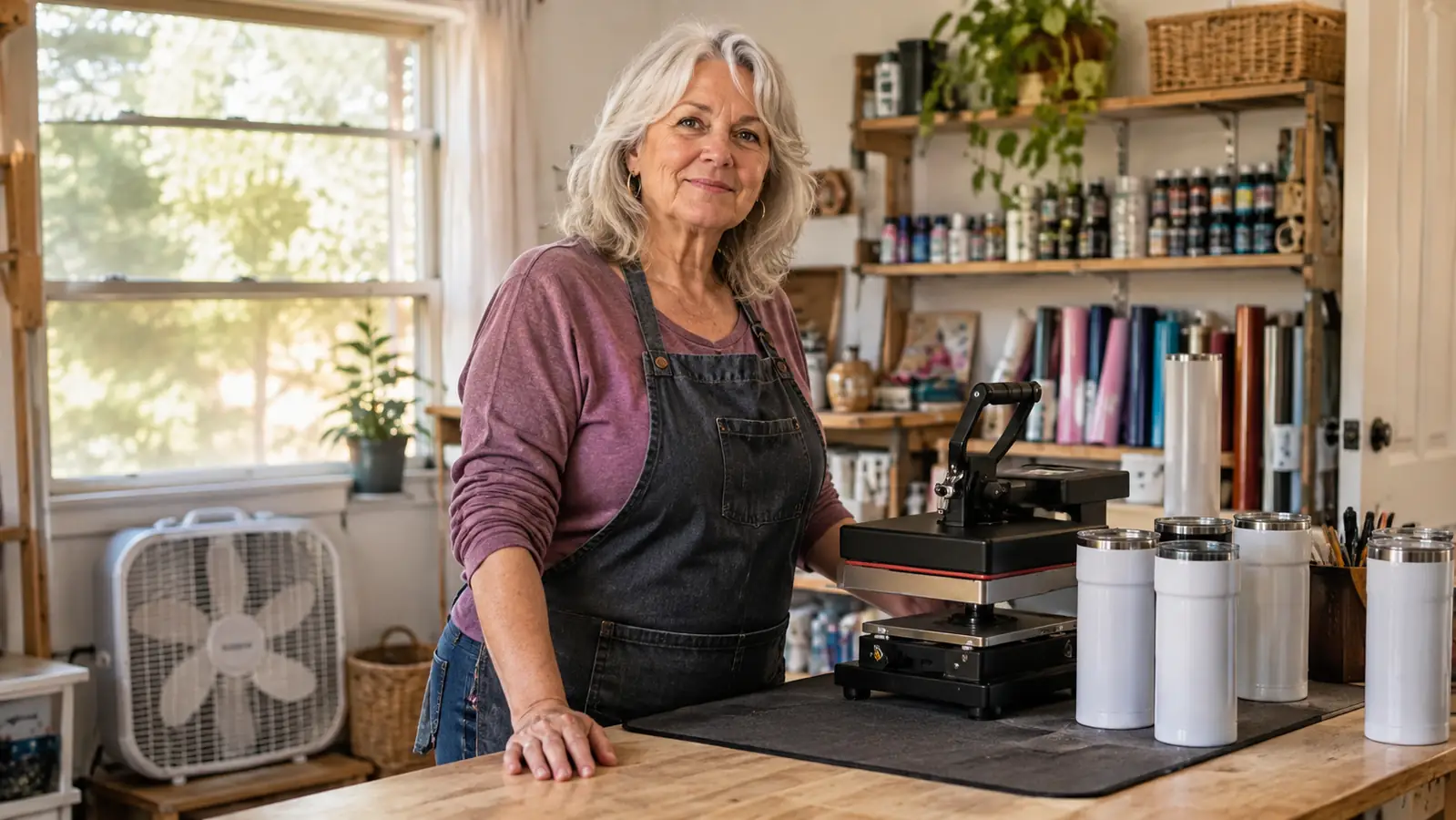
That is the gap the HTVRONT Auto Tumbler Heat Press filled. I bought mine in January 2026, after two months of oven experiments, and it has been sitting on Ray's table ever since. I am not a print shop. I am 61, retired, living in Visalia, and I make shirts, totes and tumblers for family, friends and our church's fall festival. But when I hand somebody a cup, I want it to look like I meant it.
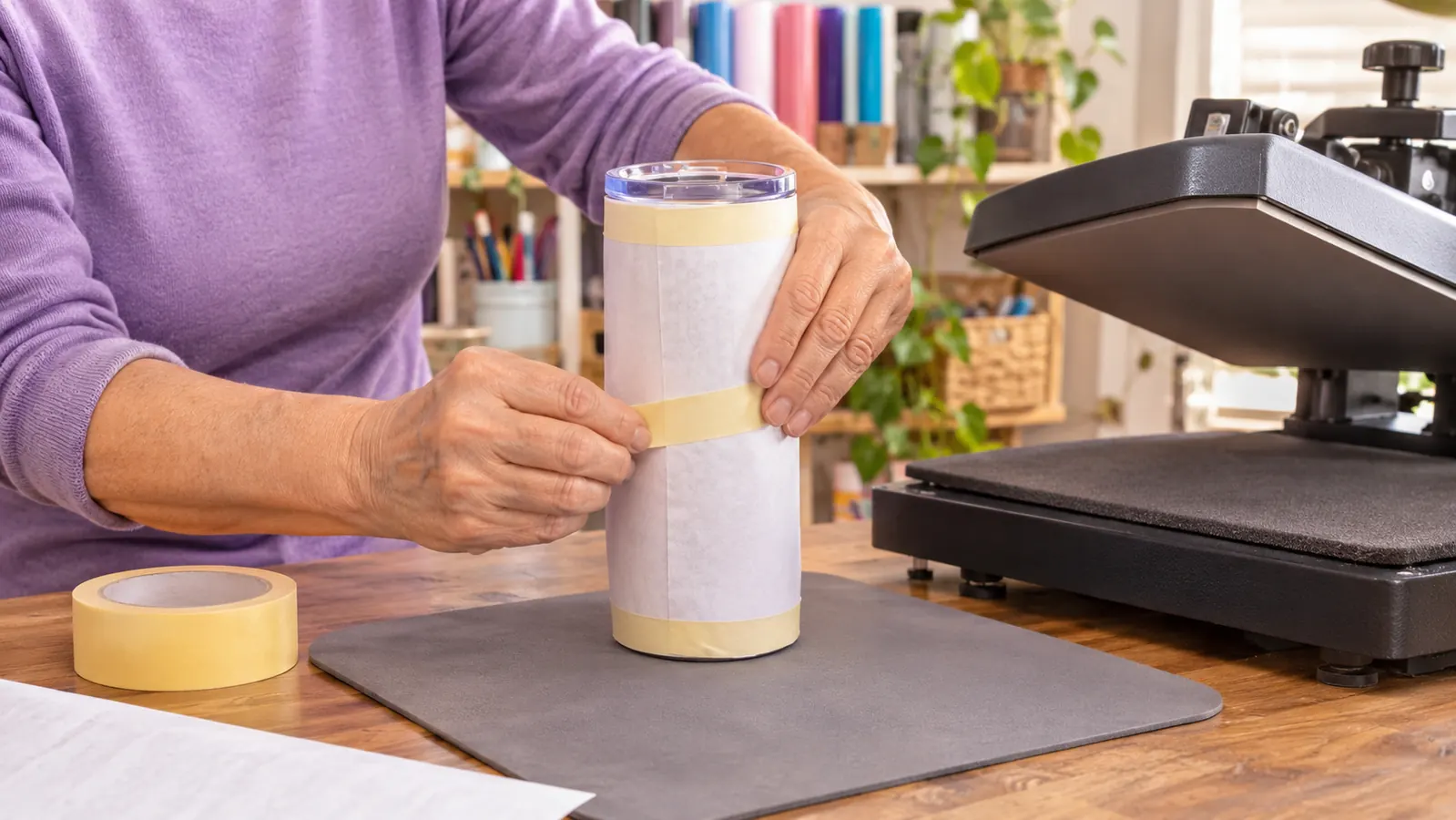
The oven method is not wrong, exactly. You wrap the tumbler in sublimation paper, tape it, cinch a shrink sleeve over it, shrink the sleeve with a heat gun, then bake the whole thing. What you cannot control is even pressure. The sleeve pulls tighter in some places than others. The paper shifts a hair when you tape it. Out of six tumblers I made that November and December, two came out clean, three were ghosted, and one had a seam line across the back you could read the newspaper through.
The HTVRONT press takes the guessing out of the pressure. It holds the tumbler against a heat pad for the length of the cycle instead of me standing over it hoping. The temperature runs from 210 degrees Fahrenheit up to 390, so there is room for the lower end some blanks want and the hot end for others. It accommodates tumblers from 2.9 to 3.2 inches in diameter, in the 280ml to 850ml range, which covers every 20 ounce skinny I have bought and the water bottles Lily keeps losing at school.
My first run was a blank I had already written off. I wrapped it, taped it, set it in, closed it and pressed the button. When the cycle finished I hit the R button, which stops the heat and releases the pad right away, and pulled it out. The image was even, corner to corner. I said something unladylike. Ray hollered from the kitchen asking if everything was all right.
Two clean tumblers out of six in the oven. Ten months of pressing since, and the only ghosting I have had was my own fault with the tape.
The machine that ended my oven experiments
This is the press that does every tumbler on my table now. Read the listing against your own blanks before you buy, the same way I did.
Amazon Check Today's Price on Amazon →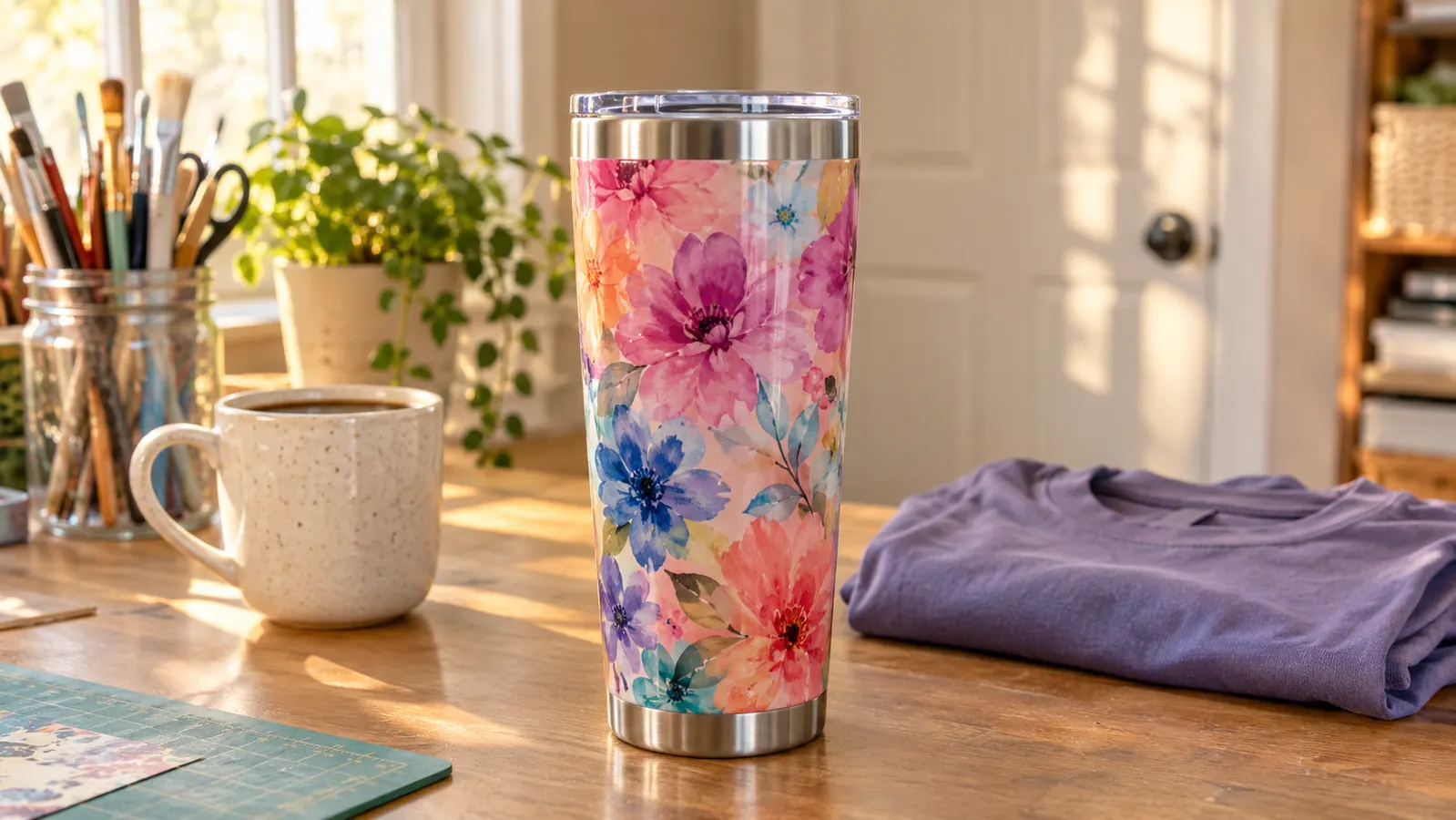
People at church ask me for numbers and I hate to disappoint them. I will not give you a temperature, because the card that comes with your blank is more reliable than anything I could tell you over a folding table. Start where the blank maker tells you to start, run one test, then adjust. What I will say is that the press applies the same pressure for the whole cycle, and even pressure is most of the difference between a clean tumbler and a ghosted one.
What I ruined first was tape lines. I got impatient and taped straight across the part of the design that shows. I also tried to rush the cool down, peeled the paper while the tumbler was still warm, and got a smeared edge for my trouble. Let it cool. That is the whole lesson. The machine's part is easy. Mine is the part I had to practice.
Safety, because this is a hot machine sitting in a spare bedroom and it goes to 390 degrees at the top of its range. I open the window and run a box fan every single time, and Pepper gets shut out of the craft room while it is on. Mason and Lily know the table is off limits when it is heating and they never touch it. I do not walk away from it while it is running, not to answer the door and not to check the pot on the stove. The R button is also the one I use most, because it means I am not wrestling a hot pad to get a tumbler out.
Ten months in, the HTVRONT has done tumblers for Lily's teacher, a set for the church fall festival raffle, and a few for friends who asked nicely. Not one has come back to me with a faded edge. I am not going to pretend it turned me into a professional. It just stopped me from handing out cups I was embarrassed by.
What I'd Tell You If We Were Sitting at My Kitchen Table
If you are standing in your kitchen right now with a tumbler in shrink wrap and a heat gun in your hand, I would tell you to finish that one, because you already started it. Then I would tell you to stop. The oven is for casseroles. The pressure is uneven, the paper moves, and you will spend more on ruined blanks than the aggravation is worth. Buy the press, buy one extra blank to test on, and do the test before you touch a blank you care about. Read the listing carefully and match the diameter and the volume to the cups you actually use, because the press has a working range and a tumbler that falls outside it will not fit. Keep the window open and the cat out of the room. That part is not optional, and I mean it.
Stop guessing at pressure in your oven
One test blank, one cycle, and you will know whether this is the fix for your tumblers. It was for mine.
Amazon Check Today's Price on Amazon →